

Agriculture and breakbulk lift Mackay trade
- Port of Mackay surpasses two million tonnes (2.016 mt) in the first half of 2025–26.
- Strong agricultural season sees grain exports exceed last financial year’s total in just six months.
- Breakbulk trade surges, with 14 vessels and more than 60,000 freight tonnes to the end of January 2026 already doubling last year’s full-year result.
- Continued strength across petroleum and sugar highlights the port’s diverse trade profile.
A strong agricultural season and growing breakbulk activity have delivered healthy harvest for the Port of Mackay, with total trade volumes surpassing the two million tonne milestone in the first half of the 2025–26 financial year.
NQBP CEO Brendan Webb said between July and December 2025, the port handled 2.016 million tonnes of trade.
“The Port of Mackay’s strong trade results are being driven by an uplift in grain activity, continued strength across key commodities and a surge in project and general cargo movements,” Mr Webb said.
“Grain exports have recorded an impressive six months, already exceeding last financial year’s total of 244,917 tonnes.”
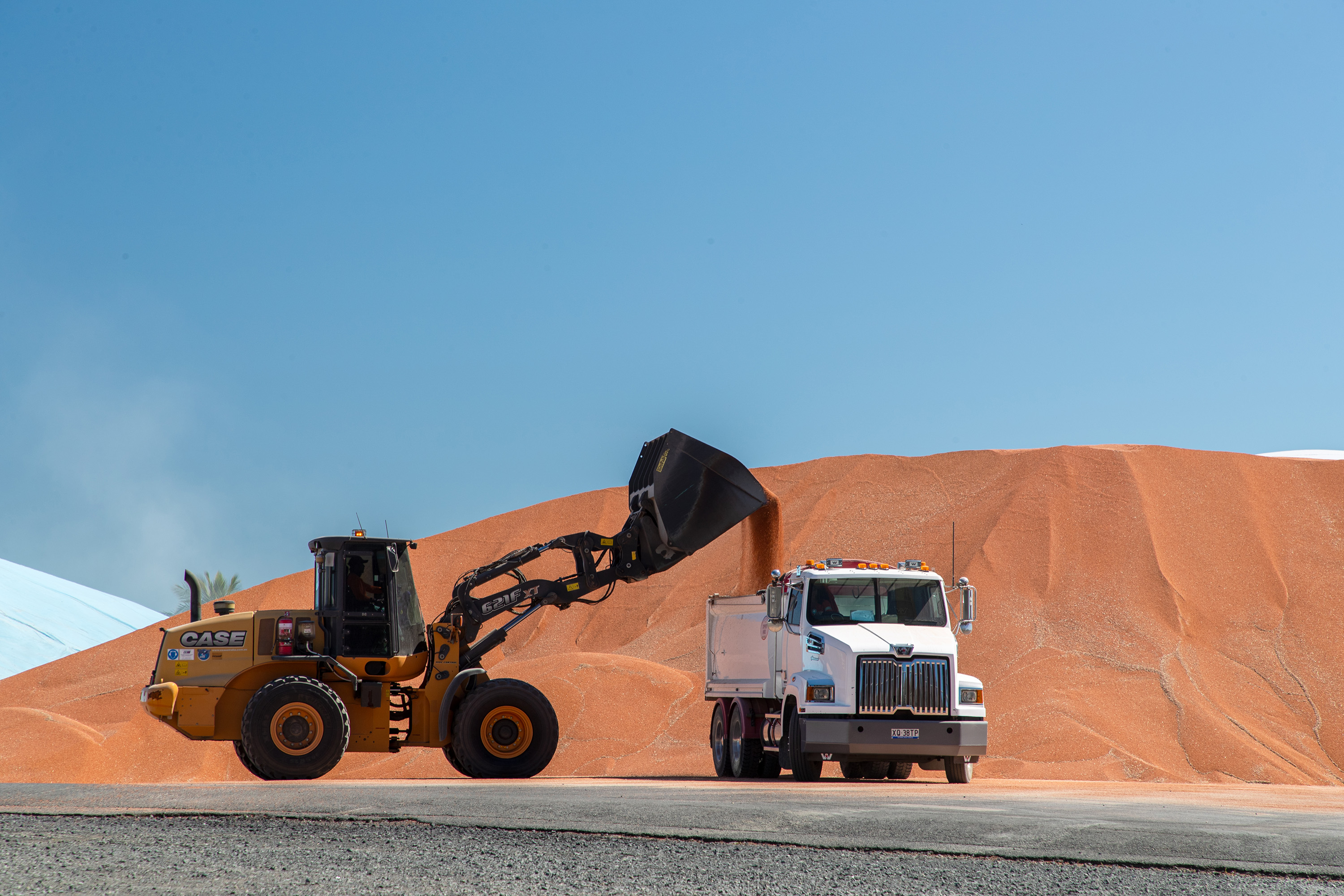
To date, 265,431 tonnes of grain have moved through the port, reflecting a successful harvest season and strong coordination across the supply chain.
“Supporting agricultural activity, fertiliser imports have also tracked strongly, with 52,551 tonnes handled so far — approaching the full-year total of 58,086 tonnes recorded last financial year.”
Mr Webb said breakbulk trade has also strengthened significantly, with vessel calls to the Port of Mackay already exceeding last year’s full‑year result, reaching 14 so far this financial year compared to 11 in FY25.
“More than 60,000 freight tonnes has been handled to the end of January 2026 — doubling last financial year’s total of 29,908 freight tonnes — reflecting strong project cargo and regional industry demand.”
The Port of Mackay’s top three traded commodities remain petroleum (import) at 1,002,709 tonnes, sugar (export) at 501,054 tonnes and grain (export) at 265,431 tonnes, underscoring the port’s balanced, multi-commodity trade profile.
“Our strong trade performance highlights the port’s vital role in supporting regional Queensland industry and global supply chains.”
“Fuel trucks depart the port 24/7 to support the Bowen Basin — a supply lifeline that underpins the mining industry’s operations,” Mr Webb said.
“Mackay is one of Australia’s largest sugar-producing regions, and the port hosts one of the world’s largest bulk sugar terminals.
“With its strategic location, multi-cargo capability and well-established regional links, the Port of Mackay plays a crucial role in connecting Queensland to the world.”
“These strong results reflect the dedication of NQBP’s workforce and the collaboration of customers and stakeholders who keep trade moving safely and efficiently.”
With solid momentum heading into the second half of the financial year, the Port of Mackay remains well positioned to continue supporting regional growth and industry outcomes.
This momentum is being supported by significant infrastructure investment, including a new multi‑million‑dollar Container Depot currently under construction, which will further strengthen the Port of Mackay’s capability and support continued trade diversification.
NQBP Background
NQBP manages the ports of Hay Point, Mackay, Abbot Point and Weipa, which together facilitate more than 150 million tonnes of trade annually, contributing $35 billion to the Queensland economy and supporting 47,000 jobs.
Collectively, NQBP ports move more than half (54%) of Queensland’s trade by volume, including 68 per cent of Queensland’s coal exports.
Images for Download
Image | An aerial view of the Port of Mackay, a key gateway connecting Queensland to global markets.
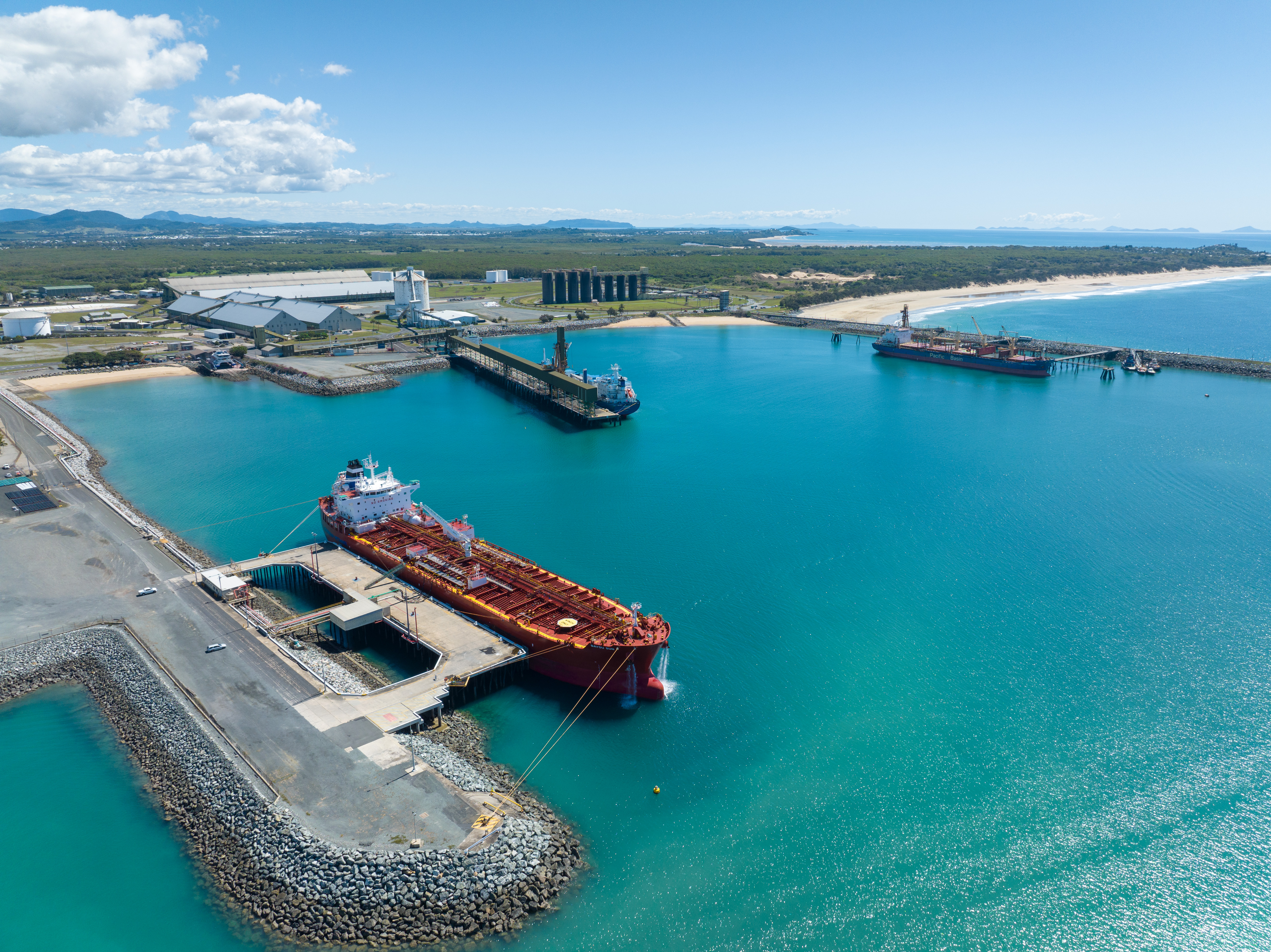
Image | The Port of Mackay has seen a lift in grain trade, with 265,431 tonnes moving through the port.
North Queensland Bulk Ports Corporation contact:
Amanda Blines | Senior Advisor Brand and Communications
0439 703 330 | ablines@nqbp.com.au
Related Articles
-
 Trade 31 Jan 2020
Höegh’s Mackay connection well received
Höegh Autoliners' monthly service to Mackay continues to be well received.
-
 Trade 2 Sep 2020
NQBP applies for 10-year maintenance dredging permits for the Port of Weipa
North Queensland Bulk Ports has applied for permits to enable the continuation of maintenance dredging at the Port of Weipa.
-
 Capital works 11 Feb 2026
Container trade to be unlocked for Central Queensland
NORTH Queensland Bulk Ports Corporation (NQBP) is paving the way for expanded and more efficient local trade with the construction of a multi-million-dollar container depot at the Port of Mackay.