

Indigenous Program
NQBP’s Indigenous Program is a strategic corporate initiative, which aims to create a structured, comprehensive, and sustainable approach to engaging with Aboriginal and Torres Strait Islander communities.
The Indigenous Program is built on four key pillars: Education Pathways, Partnerships, Relationships, and Governance, which closely align with the reconciliation pillars and the five dimensions of reconciliation.
Each pillar includes specific initiatives and actions designed to promote cultural inclusion, economic development, and meaningful engagement with Aboriginal and Torres Strait Islander peoples.
Reconciliation Action Plan
NQBP’s Innovate RAP 2026-2028 is a core element of our corporate Indigenous Program which is a strategic commitment that strengthens community connection, advances Aboriginal and Torres Strait Islander participation and drives accountable action across all areas of the organisation.
We lead with courage, curiosity and act with care, prioritising local connections and creating measurable economic and employment opportunities for Aboriginal and Torres Strait Islander peoples. Through strong governance, practical delivery and cultural capability uplift, reconciliation will be integrated into how we plan, procure, employ, partner and lead.
Our vision is to be a port authority that contributes to lasting regional impact where our communities thrive for generations. Where creating opportunities for Aboriginal and Torres Strait Islander peoples is not just an initiative, but a lived organisational standard aligned to our mission, values and responsibility to the communities in which we operate.
This, our third Innovate RAP, seeks to embed reconciliation as a core organisational commitment. This will be achieved through adopting the following principles:
We prioritise meaningful outcomes over symbolic gestures.
Reconciliation is owned across all business units, not confined to one team.
We prioritise relationships and economic participation with local Traditional Owners and Aboriginal and Torres Strait Islander businesses.
We build internal capability and support external Aboriginal and Torres Strait Islander capability growth.
We define measurable outcomes and report against them.
Reconciliation is embedded into strategy, projects and everyday operations.
About the RAP artwork
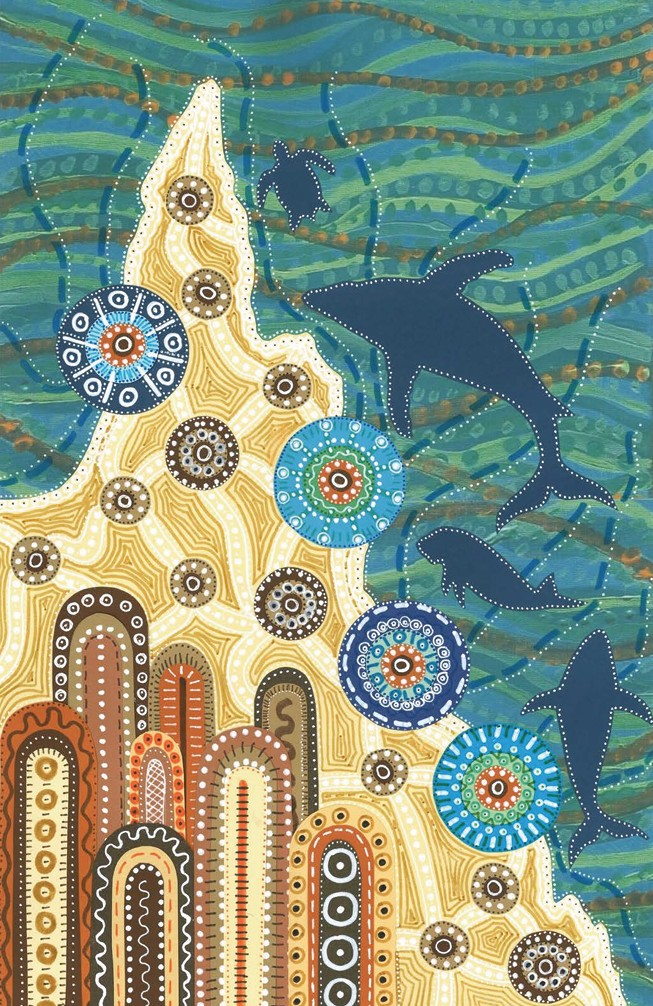
This collaborative mixed media artwork by Yuwi artists Kristina Davis and Vicky Miles is titled ‘Gudyara Community Connections’ (Gudyara is Yuwi language meaning ‘sea’). The background ‘ocean’ area is a print of one of Kristina’s original acrylic paintings. The ‘land’ area consists of paper collage with pen details drawn by Vicky.
The artwork tells the story of the communities of North Queensland Bulk Ports (NQBP) and their connections to ‘gamunandhi’ - the land and surrounding waters. The larger circles represent the four ports of Weipa (Alngith and Wik Wik Waya Country), Abbot Point (Juru Country), Mackay and Hay Point (Yuwi Country) and are linked to both inland and coastal communities.
The smaller circles represent inland communities; they are all connected to each other, the ports and the coastline by the white dotted tracks. The oblong ‘hill’ shapes and ochre-coloured lines represent the inland landscapes, home of the mining communities, connected to the coastal communities for trade.
The ocean is represented by the many blue/green wavy lines depicting the ocean currents, and the darker blue dashes and small white dotted lines represent the all-important historic coastal trade routes which have been in place since the beginning of time and continue to be a vital part of modern-day trading.
Marine life is represented with the silhouettes of whales, dugong and turtle, they are important to migration storylines and represent NQBP’s commitment to managing the environment in and around the ports.
Links to our RAPs
Reconciliation in Action
NQBP supports Aboriginal and Torres Strait Islander businesses through economic participation strategies.
NQBP and Juru Enterprise Limited (JEL) have worked closely over the past ten years to build a strong working relationship, business capability and sustainable performance.
In 2018, NQBP engaged JEL to conduct weed management at the Port of Abbot Point. In 2019, additional support for training of the Land Management Crew was provided to enable the completion of turtle monitoring and tagging operations. This included formal training provided to Traditional Owners by the Queensland Government to conduct monitoring during turtle nesting and hatching season. Active protection of nests from predators was also included in the scope of the training and these skills will provide positive cultural and ecological outcomes.
Hear more about the turtle monitoring program. The initial commitment of two years and support to provide training and equipment enabled JEL to employ an additional four personnel in Bowen. NQBP has extended our commitment with a land and sea management partnering agreement for a further three years until 2027.
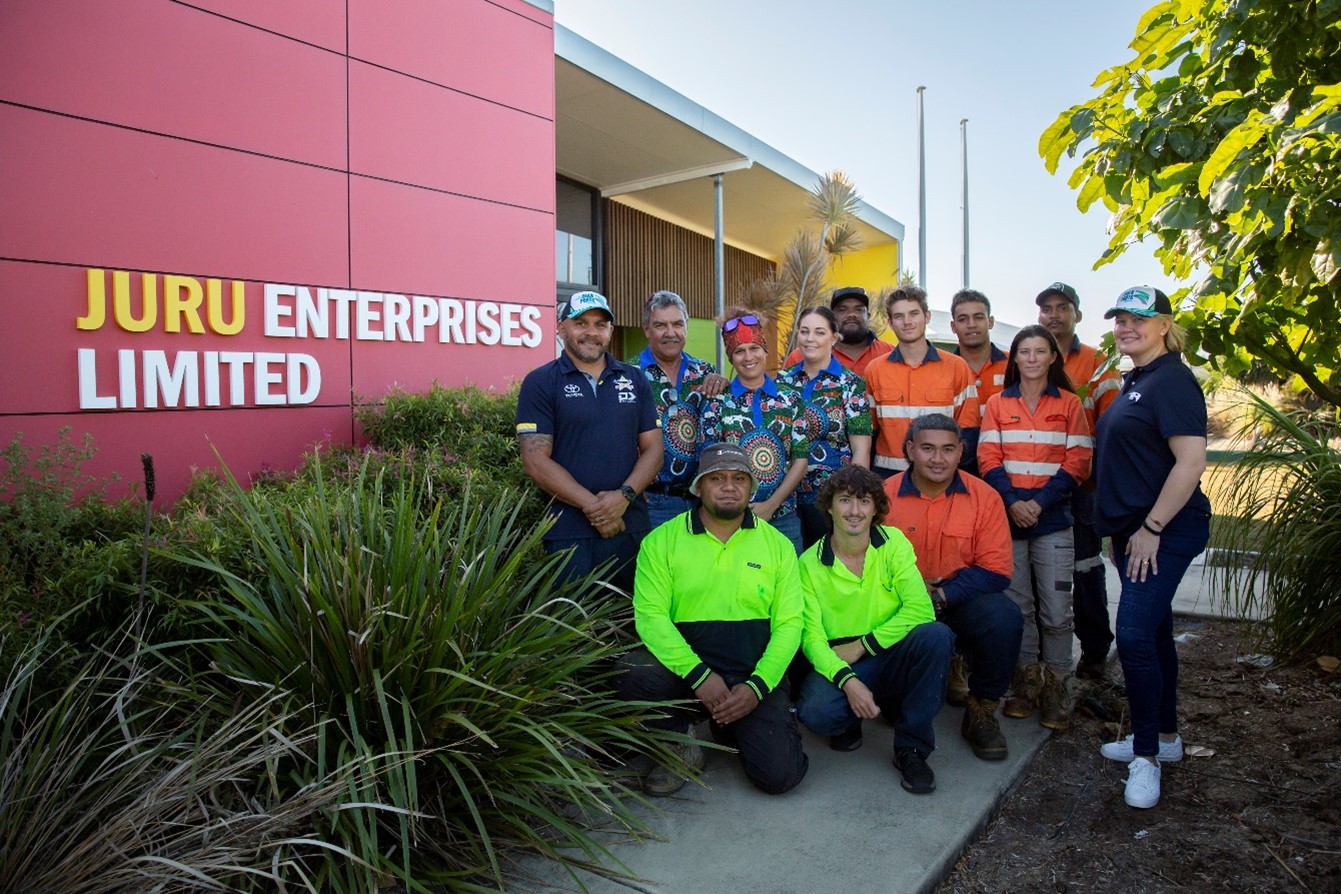
“Working with NQBP has been a very rewarding opportunity for not only myself but our staff as well, we have learnt much more than Environmental Land Management and leadership, but business opportunities within our own organisation for growth and development. I am very proud to be a part of this growing friendship," Jessica Vakameilalo, JEL.
As part of strengthening our relationship with the Yuwi People of the Mackay and Hay Point region, in January 2020 NQBP named a new road at the Port of Mackay in Yuwi language.
The new road, which provides direct access to North Wall Beach and sea, is known as Gudyara Road, meaning “sea” in Yuwi language.
The naming of the road recognises the special connection of the Yuwi People to the port land and sea country. It will also help to revive knowledge and understanding of the Yuwi language.
Yuwi Elder, Gary Mooney, said the name was chosen because sea country is very important to the Yuwi People.
“A new direct access to the beach is very important. The name Gudyara reflects this and the use of Indigenous languages is very important for the betterment of Yuwi culture”, (Gary Mooney, Yuwi Elder).
The road naming acknowledges the Port of Mackay is in the Traditional land and sea country of the Yuwi People and supports the recognition and revival of the Yuwi language.
We proudly support a number of activities that promote and celebrate Aboriginal and Torres Strait Islander cultures and heritage. This includes direct funding for NAIDOC events held within our port communities and various other projects such as the construction of Bowen State School's Yarning Circle.
During 2021 NQBP worked closely with Bowen State School and Juru Enterprises Limited to facilitate the development of a Yarning Circle at the school. The Yarning Circle was identified by the school as an opportunity to bring together Indigenous and non-indigenous cultures in a safe and respectful way. NQBP worked with the school principal Mr Christien Payne and school counsellor Ms Karenne Williams to develop the concept. We then provided funding and materials for the project, including five pylons from the historic Bowen Jetty, which were installed as five totems. Additionally, a mural was commissioned from Juru Artist, Robert Paul. The mural depicts the learning journey of students at the school.
“The five old pylons are now totems standing for the connection to country of all First Nations people. The idea is a representation of the healing process taking place in our school with our key focus on inclusivity for all students,” Karenne Williams, Bowen State School, Student Counsellor.